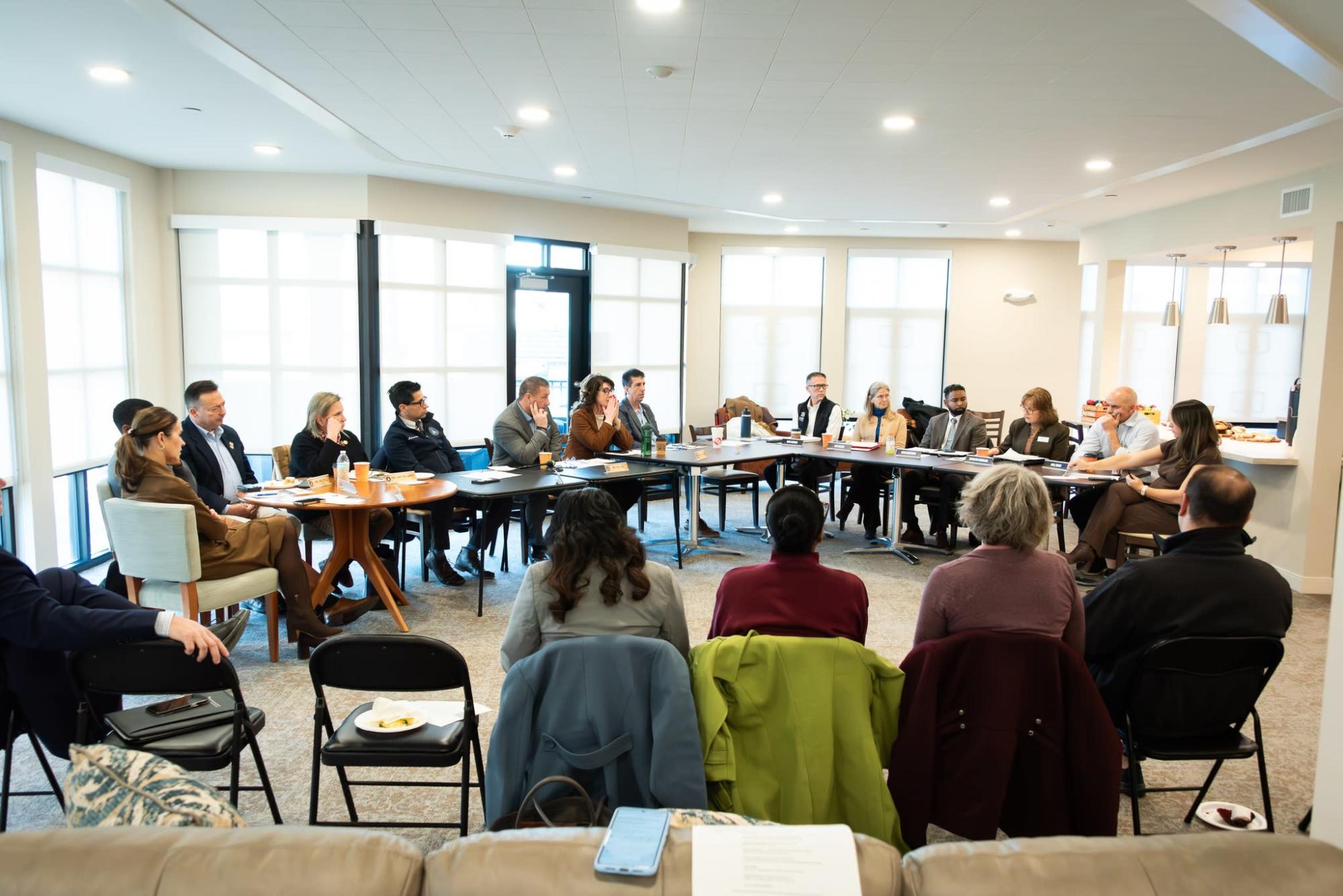
On December 9, the House Majority Policy Committee convened local leaders from government, business, real estate, and housing organizations to discuss Chester County’s escalating housing crisis—an issue that is increasingly threatening workforce stability and the region’s long-term economic competitiveness.
Participants included Laura Manion, President and CEO of the Chester County Chamber of Business & Industry; Neal Fisher, Vice President of Development at the Hankin Group; Kathleen McQuilkin, Realtor and Board Member of the Suburban Realtors Alliance; Steve Chintaman, Vice President of Government Affairs for the Pennsylvania Apartment Association; Kris Keller of Allies for Affordable Housing in Chester County; and Chris Wiseman, CEO of Habitat for Humanity of Chester County. Each brought forward direct, on-the-ground insight into the barriers preventing residents from finding attainable housing.
Home prices in Chester County have surged nearly 50% in recent years, with median prices now in the $530,000–$560,000 range and the average home reaching $664,000 in Q3. Paired with persistently high interest rates and limited inventory, these factors are putting homeownership out of reach for many middle-income families—and putting additional strain on employers who are struggling to attract and retain talent.
Manion stressed that access to affordable housing is essential for sustaining the local economy and retaining key workers across industries. She called for focused, immediate action to support the region’s workforce and ensure Chester County remains a competitive place to live and do business.
Opening the hearing, Rep. Paul Friel highlighted the growing difficulty for essential workers—including teachers, healthcare professionals, service employees, and young professionals—to live in the communities they serve. Other legislators present underscored the need for swift municipal-level action to address delays, regulatory obstacles, and severe inventory shortages.
Testifiers across the development, real estate, rental housing, and nonprofit sectors pointed to several urgent factors driving the crisis: restrictive zoning, high construction and land costs, a burdensome permitting process, and a dramatic shortage of entry-level homes.
McQuilkin noted that developers often face upfront lot costs of $75,000–$100,000 before a single foundation is poured—costs that ultimately price out middle-income buyers. Chintaman and Keller emphasized that permitting delays, zoning reforms, and excessive regulations must be addressed quickly to allow for balanced and timely growth.
Wiseman shared that Habitat for Humanity of Chester County currently has more than 150 homes under construction or in design and is partnering with the Hankin Group on a variety of projects. Still, rising construction and infrastructure costs continue to create significant hurdles for nonprofits and builders working to meet community needs.
Despite representing different sectors, all testifiers agreed on one core message: entry-level homes have virtually disappeared from Chester County’s market. They recommended several immediate steps, including increased infrastructure investment, financial incentives for mixed-income development, modernized zoning ordinances, and reductions in costly and duplicative regulations.
Chester County must act now to expand opportunities for affordable homeownership. As Manion emphasized, meaningful progress will require unified leadership and intentional policymaking to protect both local families and the businesses that rely on them. The path forward depends on collaborative, solutions-focused efforts from government, employers, developers, and nonprofit partners. Regional leaders are urging all stakeholders to come together and commit the resources necessary to ensure housing remains attainable—and to safeguard the county’s economic future.